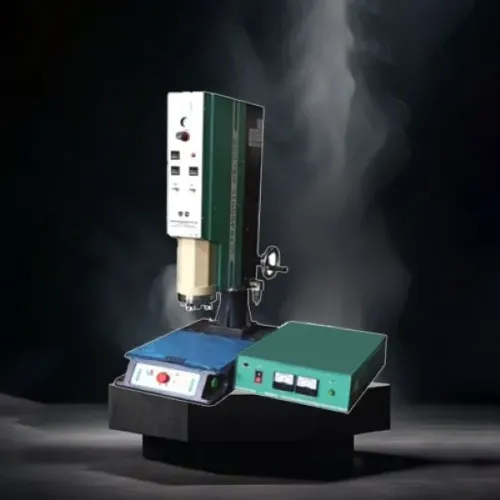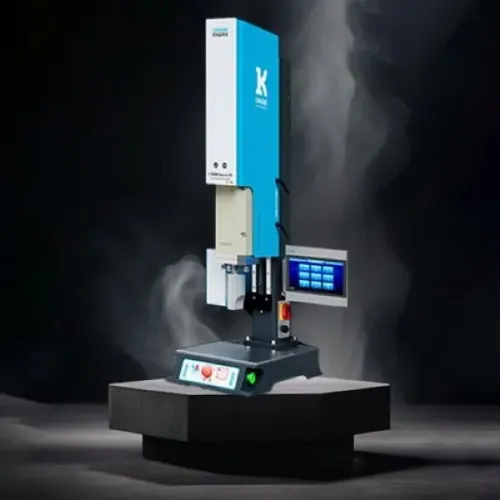

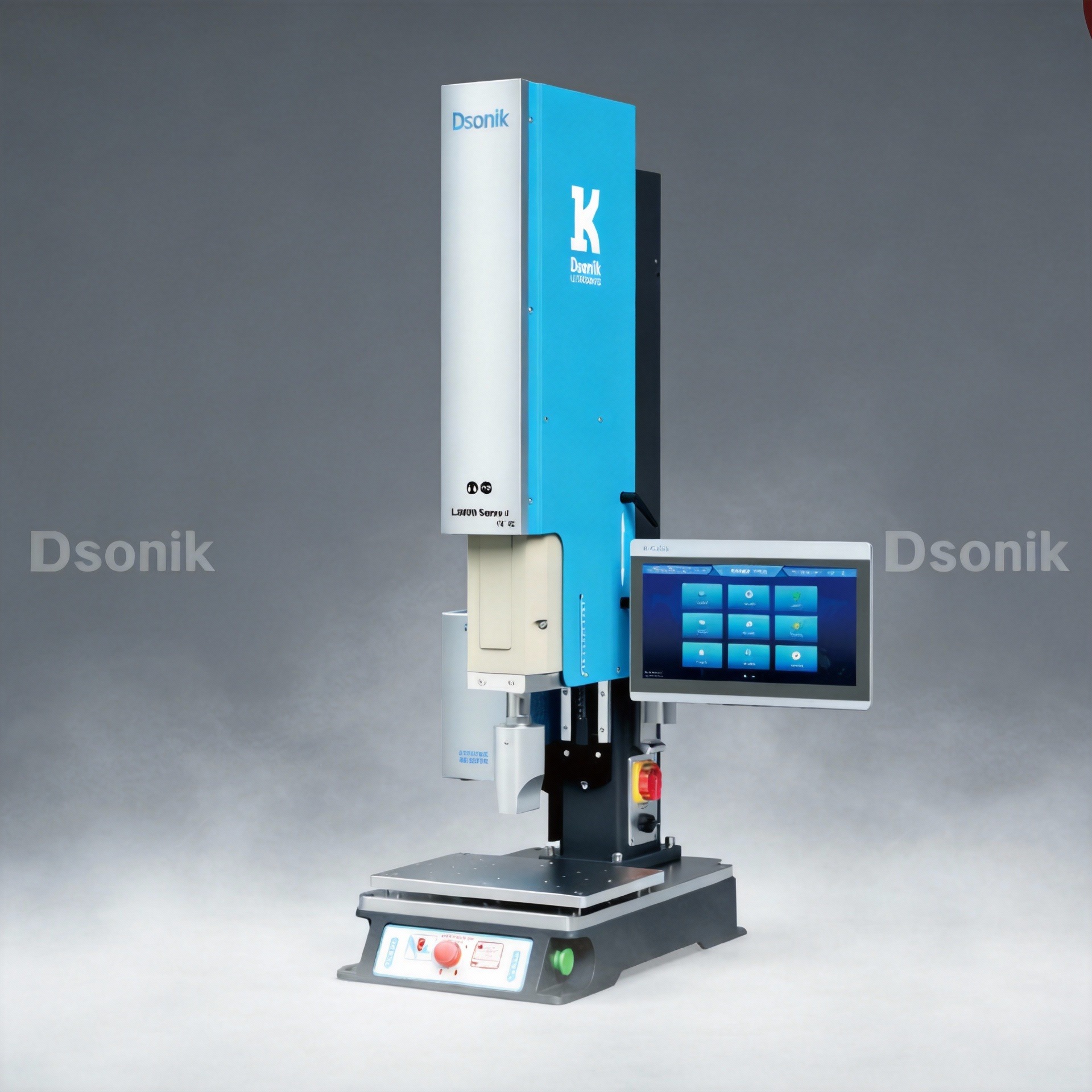
Ultrasonic plastic welding has rapidly evolved into a smart, automated, and precision-controlled manufacturing technology, driven by Industry 4.0 demands. Key advancements include digital controls with real-time adaptive systems, integration of AI and IoT for enhanced monitoring and predictive maintenance, energy-efficient servo-driven welders, and improved material joining capabilities, especially for fiber-reinforced composites and dissimilar materials. These innovations boost production speed, quality, traceability, and sustainability in high-volume and regulated sectors.
1. Digital controls & adaptive feedback: Real-time monitoring of energy/amplitude/force/displacement with automatic adjustment improves repeatability and supports validation/traceability (e.g., medical devices).
2. AI, IoT & Industry 4.0: Connected welders enable anomaly detection, parameter optimization, predictive maintenance, remote monitoring, and digital-twin testing; robotics boosts throughput and automation flexibility.
3. Energy efficiency & servo-driven systems: New platforms reduce energy/cost, while servo control improves melt-phase control for stronger, more consistent welds.
4. Expanded material joining: Better results on FRTP and dissimilar/hybrid joints (plastics-to-metals, AM parts). Typical FRTP lap shear strengths of 20–35 MPa are reported; optimized energy directors can add roughly 20–40%.
5. Continuous welding & automation tooling: Emerging continuous ultrasonic welding enables high-speed runs (reported up to 3.6 m/min) and, with better horns/fixtures and robot pre-load actuators, can cut cycle time—though overheating control remains a key challenge.
Market and Industry Impact
The ultrasonic plastic welding equipment market is growing strongly (CAGR around 6–9% in recent projections), fuelled by demand for lightweight, recyclable parts, automation, and clean manufacturing. Key drivers include electric vehicles, medical devices, and electronics assembly.
Benefits of These Advancements
• Higher quality and repeatability — Fewer defects, stronger joints, and data-driven consistency.
• Faster production — Sub-second welds with minimal energy use.
• Sustainability — No consumables, lower energy, support for recyclable thermoplastics.
• Cost savings — Reduced waste, predictive maintenance, and scalable automation.
• Traceability — Critical for compliance in medical, automotive, and aerospace.
Challenges remain in areas like multiscale modelling of energy transmission, continuous welding optimization for thick/curved parts, and broader adoption of AI for all material types. Ongoing research points to hybrid material joining and intelligent monitoring as major future directions.
Dsonik is moving with the time and adopting new technology in a fast way. Dsonik providing industry 4.0 ready servo driven ultrasonic plastic welding machine with full loaded features like Time, energy, absolute travel, precise welding control, welding data transfer, IOT based programming service support and lots more.
If you're working on a specific application (e.g., automotive composites, medical parts, or a particular machine), let Dsonik know for more targeted details.