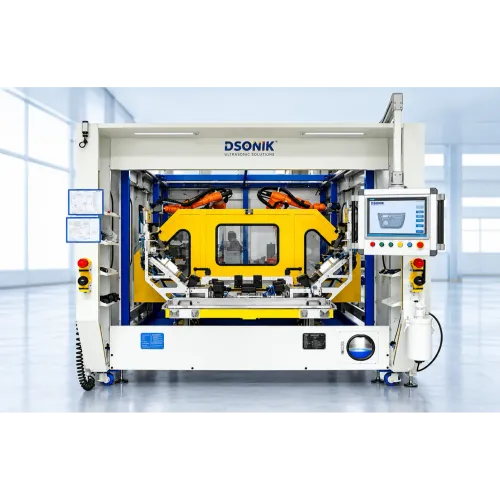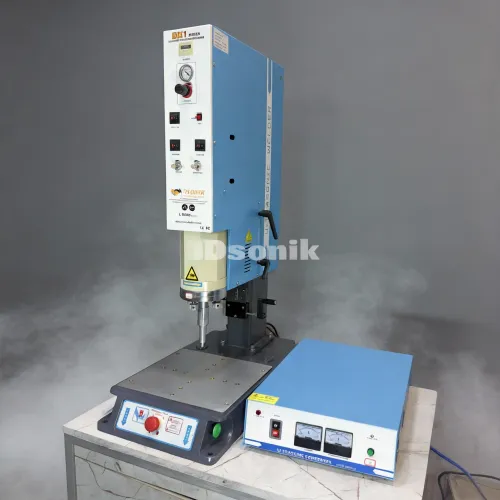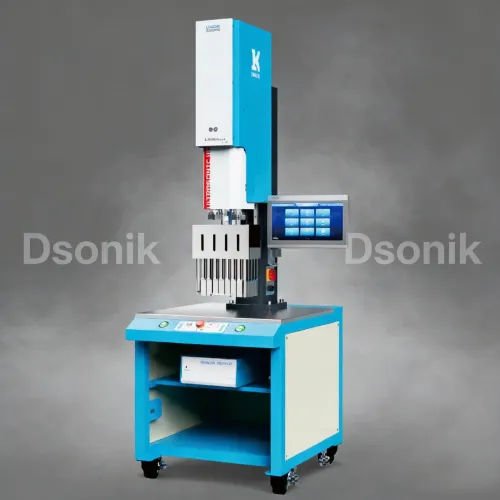


For joining thermoplastic parts, ultrasonic welding is probably the best choice when you need short cycle times, a clean finish, easy automation, and no consumables. That said, adhesives, screws, and snap-fits each outperform it in specific situations.
Comparison at a glance
Factor Ultrasonic Welding Adhesive Screws Snap-Fit
Joining speed Very fast, typically under 1–2 s Slow; requires cure time Medium Very fast
Consumables None Adhesive required Screws required None
Automation Excellent Moderate Good Excellent
Joint appearance Clean/hidden Clean with good process control Screw heads visible Usually clean
Joint strength High High, depends on materials High Medium
Airtight / watertight Achievable with correct joint design Excellent Poor unless gasketed Poor–medium
Dissimilar materials Limited Excellent Excellent Limited
Disassembly No Usually no Yes Sometimes
Part design requirement Benefits from energy director/joint design Adequate bonding area Often needs bosses or inserts Molded hooks or latches
Initial equipment cost Higher Low–medium Low–medium Low
High-volume production Excellent Moderate Moderate Excellent
When to choose ultrasonic welding
Ultrasonic welding is ideal for high-volume thermoplastic assemblies, such as:
• Automotive parts
• Electronics enclosures
• Filters
• Medical devices
• Toys and appliances
• Battery components
• Packaging
How the process works
1. The horn vibrates against the parts.
2. Friction and intermolecular heating build up at the joint.
3. The plastic melts locally.
4. Pressure is held while the material solidifies.
5. A permanent weld forms.
Running at 20, 30, 35, or 40 kHz, the process completes a joint in a fraction of the time many adhesive systems require.
When alternatives are a better fit
Adhesives
• Best for: materials that cannot be welded ultrasonically, very large or irregularly shaped parts, assemblies with vibration-sensitive components, and dissimilar materials such as plastic to metal.
Screws
• Best for: products that must be opened later for maintenance, repair, battery replacement, or servicing.
• Trade-offs: in mass production, screws add parts, assembly steps, and bosses or inserts, and they can loosen over time.
Snap-fits
• Best for: high-volume molded products, where assembly takes a fraction of a second and no dedicated joining machine is needed.
• Trade-offs: the locking features require careful design and may not match the strength, sealing, or permanent, tamper-resistant bond of an ultrasonic weld.
A practical rule of thumb
• Ultrasonic welding – evaluate first for permanent thermoplastic assemblies made in medium to high volumes.
• Adhesives – choose for dissimilar materials or complex joint geometry.
• Screws – choose for products that need servicing.
• Snap-fits – choose for simple, low-load, very fast assembly.
For DSONIK's industrial customers, the strongest case for ultrasonic welding is rarely just “ultrasonic is stronger.” The real business value comes from the combination:
No adhesive + no fasteners + very short cycle times + a repeatable, automatable process = lower joining cost per part with ultrasonic plastic welding.